Paramount Home Solutions repairs leaking and storm-damaged shingle roofs in Allentown – leaks, missing or lifted shingles, and the flashing at chimneys and vents. We drive out from our office in Schwenksville, about 55 minutes away, and we're open every day from 8 AM to 8 PM. The inspection is free, and your price goes in writing before any work begins.
Book a Free Roof Inspection
We'll call back to set up your free inspection.
Or call us directly: (267) 351-2882 – open every day, 8 AM–8 PM
We repair pitched asphalt-shingle roofs, and every job starts with finding where the water or damage begins.
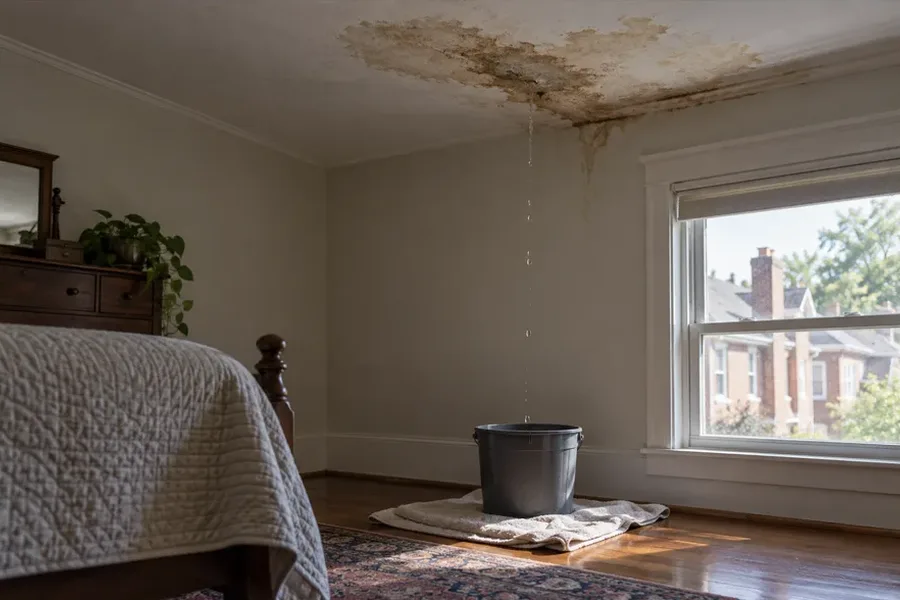
Before we price anything, we find where the water gets in. It might be a flashing joint, a cracked pipe boot, a worn valley (the V where two slopes meet) or the line where your roof meets the house next door. Call when a stain appears or grows.
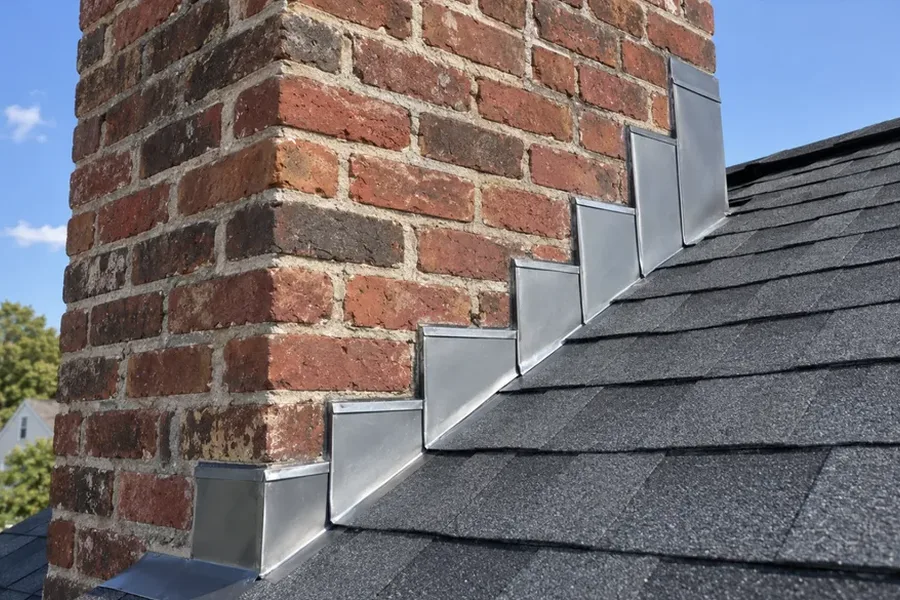
Flashing is the thin metal that seals the joint where your roof meets a chimney, a wall or a vent. We reseal it or replace it. A stain near the chimney after a thaw is the classic flashing leak – call us when you see one.
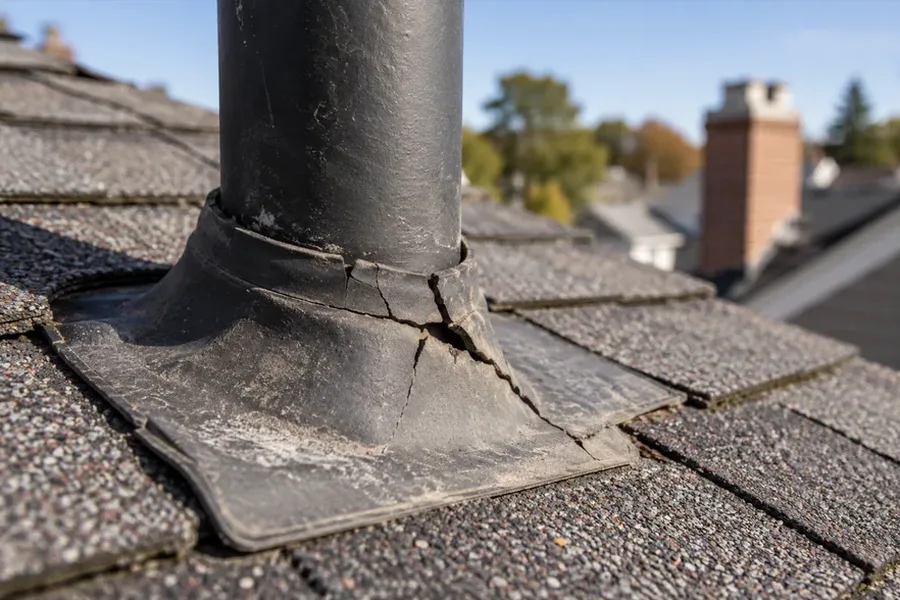
A pipe boot is the rubber collar that seals a plumbing vent where it comes through the roof. Sun and age crack it, and water runs down the pipe to the ceiling. We replace the boot. Call when a drip appears under a bathroom vent.
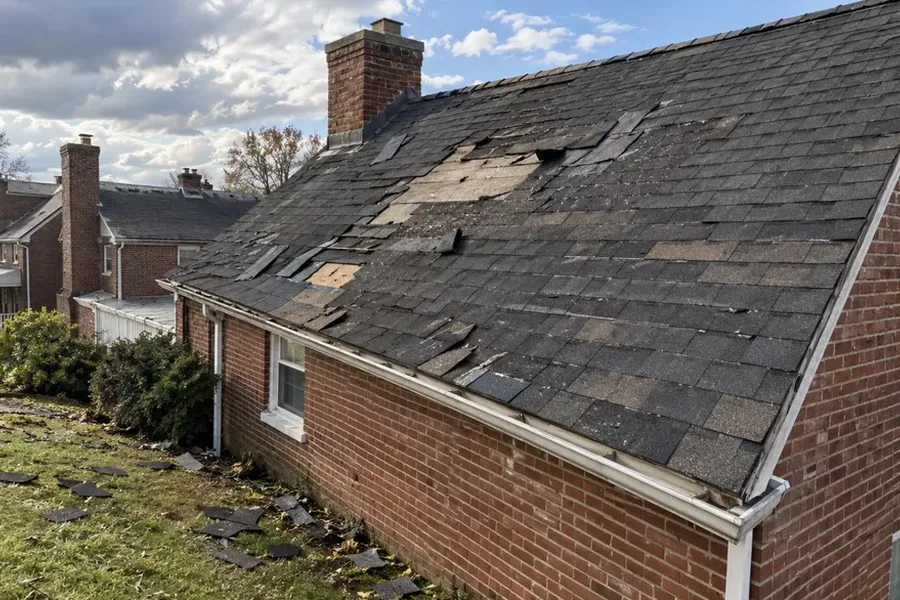
Severe thunderstorm winds hit somewhere in Lehigh County about six days a year, and older shingles lift, crease or blow off. We replace lifted, curling or missing shingles and reseal the rows above. Call when you find shingle pieces in the yard.
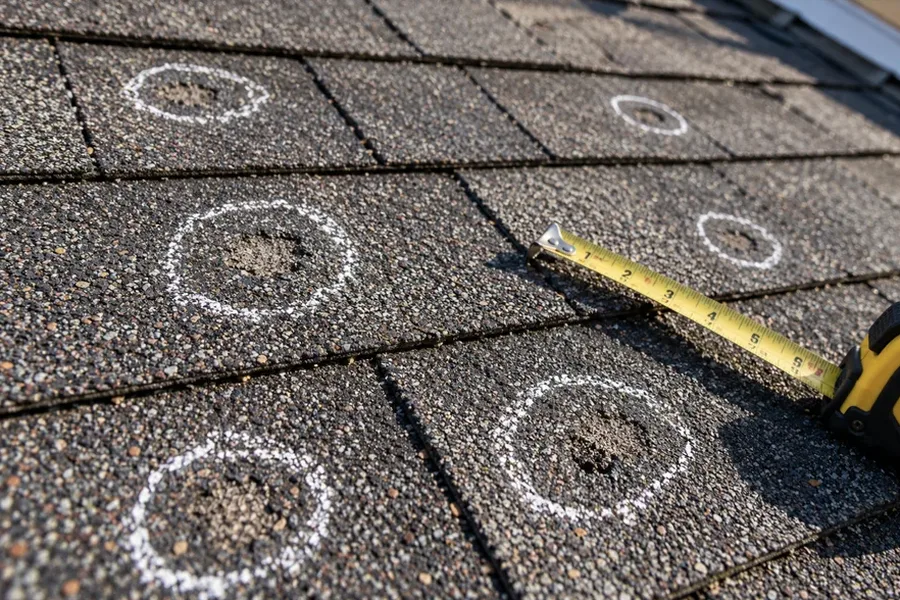
Hail reaches this county in most years. It bruises shingles – cracks them under the granules, the sand-like coating – and from the ground you won't see it. We photograph every slope and mark the same 10-by-10-foot test squares an adjuster uses. Call after any hailstorm.
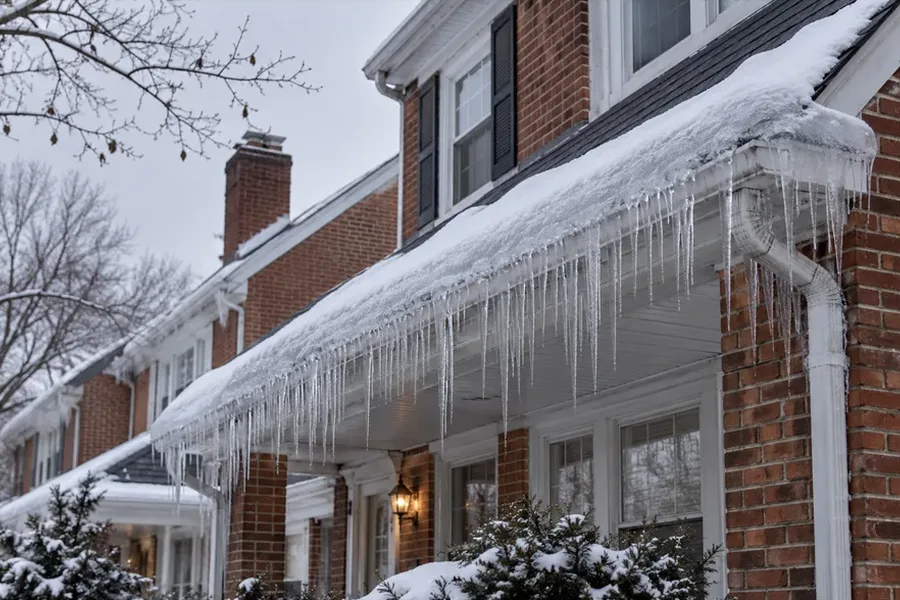
Ceiling stains as the snow melts, frost on attic nails or damp insulation point to an ice dam and an attic running too warm. We check the eaves, fix the shingles and flashing, and correct the ventilation behind it. Call while the stain is fresh.
About half of the homes Allentown owners live in were built before 1950, and three in four before 1960. A roof on a house that age has usually been patched or re-covered before. In our experience, the leak tends to come at the joints – around the chimney, at the vent stacks, along the wall flashing – and not from the middle of a slope.
Roughly half of homeowners here live in a rowhome, twin or townhouse. Your roof runs into your neighbor's roof or up against a wall, and that seam lives on step flashing and counterflashing – the two layers of metal that lap over each other so the roof and the wall can move separately. Water often gets in there.
Then there's winter. The city averages about 33 inches of snow, and on more than half of winter days it freezes at night and thaws by day. Attic heat melts the snow higher up, it refreezes at the cold eaves and backs up under the shingles.
So on your visit we look at the eaves, the flashing and the attic before we suggest anything. If a stain showed up after the last thaw, book the free inspection before the next snow.
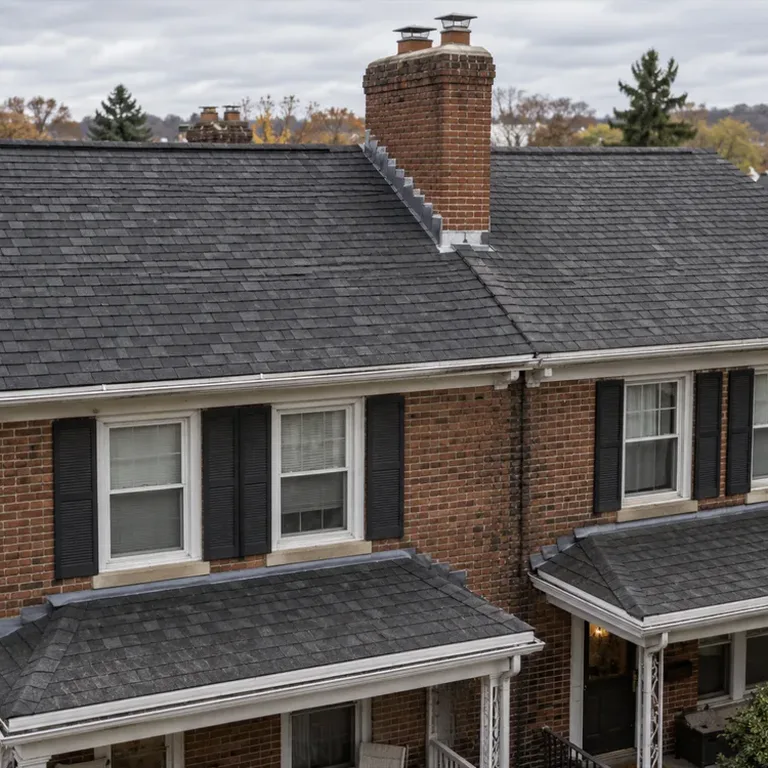
A repair with us runs in four steps.
Phones are on daily from 8 AM to 8 PM – tell us where you see water and when it began.
We take photos of each slope, note the flashing, shingles and ventilation, and check the attic and the decking, which is the plywood the roof is nailed to. It usually takes under an hour.
You get an itemized price with no obligation. It changes only if hidden damage such as rotted decking turns up, and we tell you first.
Our own crews replace the damaged shingles, flashing or pipe boots. Before patching, we confirm your shingles are still in production, so the repair matches.
Five things you can check before anyone sets foot on your roof.
We're rated 5.0 on Google. These four are about leaks, vent collars and an honest inspection. Read all 420+ Google reviews
“They came out on short notice on a Sunday morning to install pipe collar repair kits on all of our vent stacks, which had been damaged and were causing a leak. They were punctual, took the time to explain everything thoroughly…”
“We had a roof leak due to a storm and the team came out within 24 hours & quickly identified the issue & fixed it.”
“Recently, i decided to see if they can help on a lingering roof leak. … Mike was awesome as he explained the issues he saw and how he approached it.”
“Their sales manager, Tyler, performed a totally free thorough inspection of both the outside and inside of the roof. Absolutely no selling pressure and gave me a surprisingly honest assessment of the condition of the roof and left the decision to replace it entirely up to me.”
On older Allentown roofs, the stain is rarely right under the hole. Water gets past a shingle or a flashing joint, runs along the decking and drips where it finds a low spot – sometimes several feet away. That's why we trace it from the attic before anyone touches a shingle.
| What you notice | What's usually wrong | What we do on the visit |
|---|---|---|
| A ceiling stain after the snow melts | An ice dam backing water under the eave shingles, or loose eave flashing | Check the eaves, the flashing and the attic ventilation behind the melt |
| A stain near the chimney | Failed chimney flashing | Reseal or replace the step flashing and counterflashing |
| A drip around a bathroom or kitchen vent | A cracked pipe boot | Replace the boot and check the shingles around it |
| Shingles in the yard after high wind | Shingles lifted or torn off by wind | Replace them and seal the course above them |
| Granules in the gutters or dark spots after hail | Bruised shingles | Photograph each slope and mark adjuster-style test squares |
| A leak along the wall you share with a neighbor | Worn joint flashing at that seam | Trace the seam and reseal or replace that flashing |
| Frost or damp insulation in the attic | Ventilation out of balance | Check the soffit and ridge vents and correct the airflow |
If the damage is spread over several slopes or the roof is past 20 years, check what a repair costs and when we'd tell you to replace before you pay for a patch.
A small repair – a few shingles, a cracked pipe boot – usually runs $150–$800. A larger section can run from a few hundred dollars to several thousand. What moves the number is the type and size of the damage, the materials and the labor, and emergency or structural repairs cost more. On an older house, a lot depends on what's under the shingles: solid decking keeps a job small, soft boards make it bigger. We'll tell you on the visit which of these your roof falls into, and the inspection itself is free.
| Repair | Usually runs | What moves the price |
|---|---|---|
| Free roof inspection | Free, no obligation | – |
| Small repair (a few shingles, a pipe boot) | $150–$800 | How much is damaged, roof pitch and access |
| Larger section repair | A few hundred dollars to several thousand | Size of the area and what's under it |
| Hidden damage (rotted decking) | Priced only after we show you | Found when shingles come off |
If the bill lands at a bad time, financing is available for urgent repairs, with same-day approval in most cases – conditions apply. The only thing that can change the price is hidden damage like rotted decking, and you hear about it from us before it's added. Your exact number goes into a written, itemized estimate – materials, labor and any decking on their own lines – and no work starts until you have it.
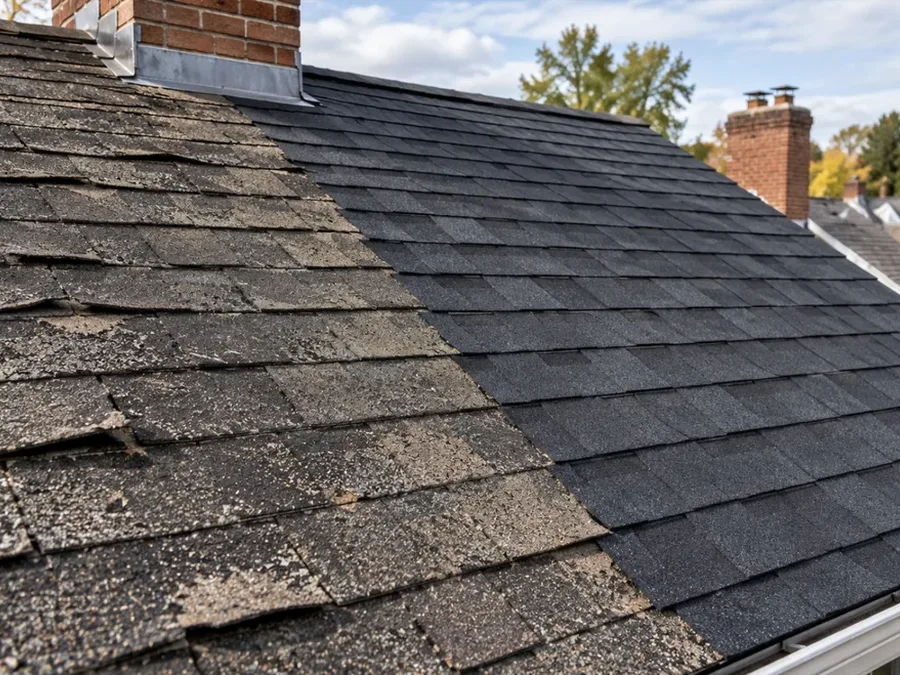
Our rule of thumb: isolated damage on a roof under about 15 years old is usually worth repairing. Widespread granule loss, curling on several slopes or a roof past 20 years points to pricing a replacement instead. And if the honest answer is that your roof can wait, we'll tell you that too.
Before we patch, we check that your shingle line hasn't been discontinued, so the repair matches what's already up there. When replacing does make sense, we install a complete GAF roofing system – underlayment, starter strip, shingles, ridge cap and ventilation – and whichever way you go, the price is in writing first. If cost is the worry, ask about financing for the repair.
Call (267) 351-2882 – we pick up seven days a week, 8 AM to 8 PM.
Water coming through the ceiling. Move furniture and electronics, catch the drip in a bucket with towels around it, and photograph everything wet before you clean up. If the ceiling sags, keep everyone out from under it and don't poke it.
Water near lights, outlets or wiring. Don't touch it. Switch that circuit off at the breaker only if you can reach the panel without standing in water – if not, keep away and call an electrician. Sparks, smoke or a burning smell: get out and call 911.
Stay off the roof. Nobody goes up on a wet or icy roof. Take photos from the ground for your records – we'll do the climbing.
Call Now – (267) 351-2882We drive to all of Allentown – Center City, the West End, the East Side and the South Side – and to nearby Emmaus. The trip from our office in Schwenksville runs about 31 miles, roughly 55 minutes, and the Lehigh Valley around Allentown is part of the area we serve. Wherever you live in town, the free inspection and the written price work the same way.
What callers ask us, answered the way we'd answer on the phone.
Fixing a small leak – a handful of shingles or one vent collar – usually runs $150–$800, and a bigger section can reach from a few hundred dollars into the several thousands. On older homes the leak often sits at the flashing rather than in the shingles, which can keep the job small. The inspection costs nothing, and the exact figure comes itemized in writing before we lift a single shingle.
Yes, when the damage is isolated and the roof is under about 15 years old. We lift and replace the damaged shingles, seal the rows over them again and swap any hit flashing or pipe boots. First we make sure your shingle is still manufactured, so the patch matches. If the roof is past 20 years or the damage covers several slopes, we'll tell you so – and whatever you choose is priced in writing first.
It depends on your policy and on what caused the damage. Wind or hail is often covered, wear and age usually aren't, and your insurer makes that call. The claim stays yours – we photograph the damage, write a scope your adjuster can work from and can be there when the adjuster visits. We can also pull a free storm-history report for your address.
Call someone who finds where the water gets in before patching anything, because the stain and the entry point are often feet apart. On a visit we photograph every slope, check the flashing and go into the attic. Our crews are insured with general liability and workers' compensation, and we work under PA Home Improvement Contractor registration PA166876.
We're about 31 miles away in Schwenksville, roughly a 55-minute drive, and the line is open 8 AM to 8 PM, every day. Call (267) 351-2882, tell us what's happening, and we'll set an inspection time that works for you. If water is coming in while you wait, keep the drip in a bucket, stay clear of wet wiring and stay off the roof.
Call (267) 351-2882 or send the form. We'll take pictures of the whole roof, walk you through what we found and put the price on paper before anyone starts work. You decide from there.
(267) 351-2882
Roof leak, flashing and storm-damage repair for Allentown homes, by Paramount Home Solutions of Schwenksville, PA.